In today’s rapidly evolving digital landscape, cybersecurity has transitioned from being a technical necessity to a fundamental business imperative. This transformation is reshaping boardroom agendas and influencing recruitment strategies, especially in sectors like HR and payroll where sensitivity and trust are paramount. High-profile data breaches, expanded use of AI technologies, and the increasing importance of protecting workforce data have blurred the lines between backend security measures and public trust.
When it comes to HR and payroll systems, trust is no longer just a luxury; it’s a requirement. As various platforms handle critical information such as compensation details, bank accounts, and personal identities, the urgency to establish and maintain trust grows daily. The reality is that complex systems often erode trust, leaving organizations exposed to unnecessary risks.
Complexity Erodes Trust
Data is inherently personal, and as complexity increases, so does the risk associated with managing that data. According to a recent report by Cisco, over 75% of consumers will not engage with a company that they don’t trust to handle their data securely. This statistic underscores how privacy expectations are now guiding consumer behavior across all industries.
HR platforms that depend on multiple databases and integrations are particularly vulnerable; every transfer of sensitive information introduces multiple opportunities for errors, exposure, or misconfiguration. A lack of a unified system of record creates avoidable complexity that limits visibility and oversight, resulting in heightened risk levels for organizations.
How HR Technology Builds Measurable Brand Trust
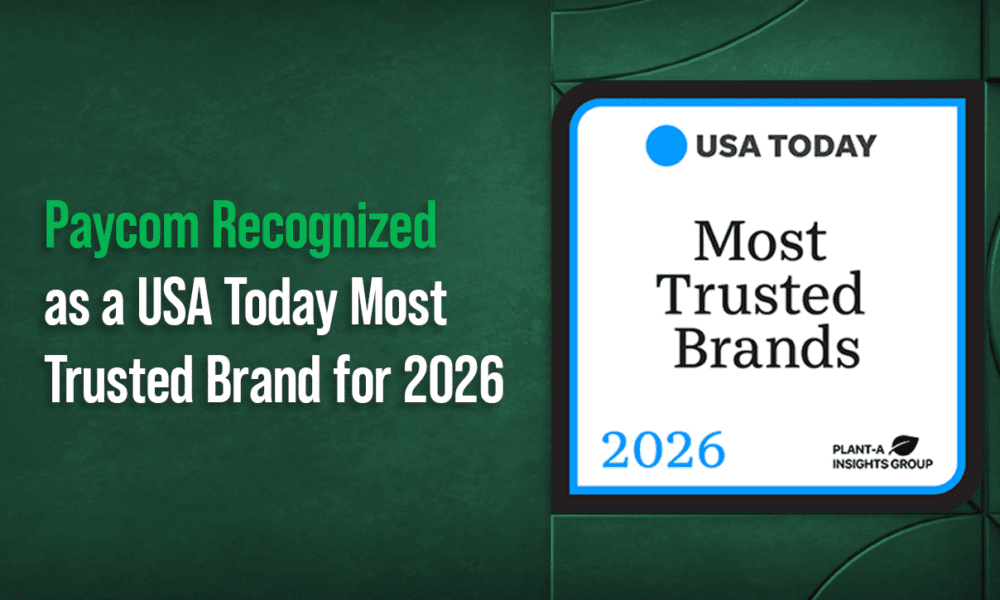
Trust has evolved into a tangible metric that organizations can measure. Lists such as USA Today’s Most Trusted Brands for 2026 showcase this trend, highlighting factors like reliability and transparency in evaluating organizations. In this context, HR and payroll technology plays a crucial role in shaping perceptions of trust.
Among the leaders in this arena is Paycom, recognized for its unwavering commitment to security standards and dependable service. In a recent press release, Shane Hadlock, president and chief client officer at Paycom, emphasized that “trust is built when technology aligns with the business and exceeds expectations.” This dedication to offering a comprehensive solution, along with strong security measures, aligns with the needs of modern organizations.
Designing Systems for Trust and Accountability
To build trust, the emphasis must be on minimizing data movement and enhancing transparency. In the realm of HR and payroll technology, adopting a single-database architecture can significantly limit data duplication and reduce integration risks. Paycom’s platform exemplifies this method, allowing for better operational governance by centralizing sensitive data.
Furthermore, formal certifications and regular audits reinforce Paycom’s security posture. Their ISO and SOC designations, along with annual independent assessments featured on their security page, serve as a public testament to their commitment to maintaining high security standards. Such credibility acts as a proxy for market perception, making it easier for organizations to trust their systems.
The takeaway for executives is clear: simpler systems are easier to trust. A single database minimizes the risk of duplicate data, helps streamline access control, and simplifies security verification processes. When organizations consolidate workforce data into one automated HR and payroll system, they can pivot their focus from rectifying mismatched records to enhancing HR strategies and improving employee experiences—all while safeguarding sensitive information.
A New Era of Trust in HR and Payroll
As the value of trust continues to escalate in the digital age, companies must prioritize cybersecurity as a core component of their HR and payroll strategies. By embracing a simplified, secure technological approach—one advocated by companies like Paycom—organizations can build the trust essential for long-term success. In an era where brand reputation hinges on data security, rethinking how we manage sensitive information is critical.
This shift not only protects the organization but also fortifies the trust that employees and consumers have in the brand, making it a vital component of any forward-thinking business strategy.
Leave a Reply